UEFA and 55 national associations to boycott FIFA competitions over private investment plans
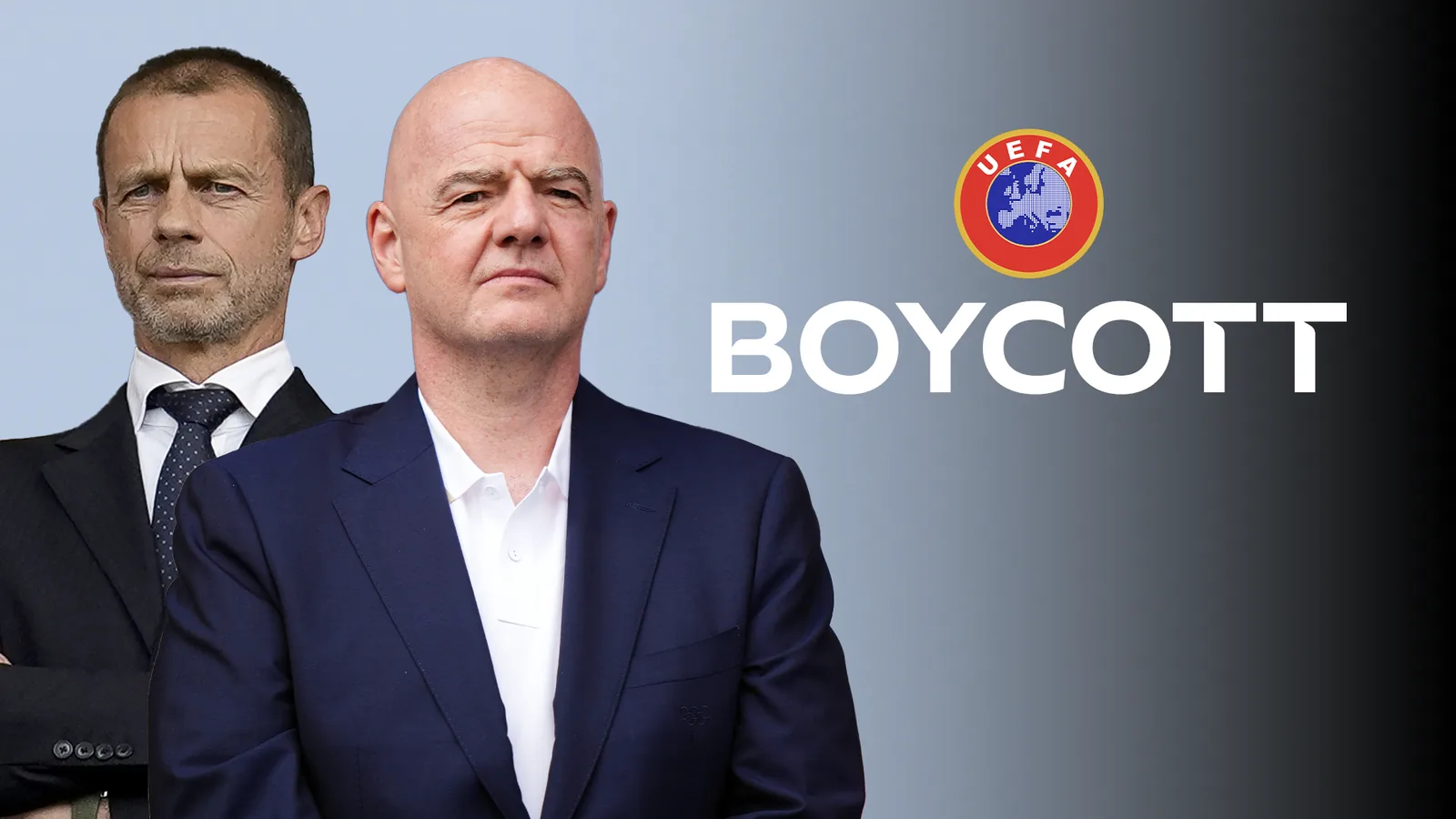

UEFA and its 55 national associations have unanimously rejected FIFA’s proposal to transfer ownership interests in the World Cup and other FIFA competitions to private investors. This decision was made during an emergency meeting on Thursday, resulting in a 55-0 vote against the plan. The European football governing body stated that no UEFA national teams will participate in any FIFA competition as long as these proposals remain active, unless they are entirely abandoned and binding assurances are given that FIFA will not open its governance or competitions to private ownership again.
Laura McAllister, UEFA vice-president, accused FIFA of attempting to blackmail member associations into accepting the private equity plan. She described the proposal as a “genuine existential threat to the game” and a “ridiculous proposal.” McAllister, who was elected to her position in 2023 and sits on UEFA’s executive committee, highlighted the unity among UEFA nations regarding the issue. She also noted that FIFA president Gianni Infantino had offered national associations £15m to accept the proposal by 19 September, with a promise of a further £15m to follow.
Casino Bonuses

100% up to £500 + 100 Free Spins
- Welcome Package up to £1,000
- 50 Free Spins on Your First Deposit

100% up to £1,000 + 150 Free Spins
- Up to £2,000 Across 3 Deposits
- 25 No-Deposit Free Spins
Concerns over private ownership
The core of UEFA’s opposition stems from the belief that the World Cup should not be treated as an investment product. The organisation views it as one of football’s most significant sporting legacies, built over generations by players, national teams, and supporters. They argue that no part of it should be surrendered to private investors, asserting that “The World Cup is not for sale.”
UEFA criticised the secrecy surrounding the proposal’s conception, stating that it was brought to the brink of approval without meaningful consultation with those entrusted with stewarding the game. This was described as a profound failure of leadership and an abdication of FIFA’s duty as the custodian of world football. The organisation also characterised FIFA’s approach as an ultimatum, forcing national associations to either accept the irreversible capture of football’s greatest competitions or face consequences, which they deemed as “governance by intimidation” and an “act of coercion.”
The statement from UEFA emphasised that once external investors acquire ownership interests, football would change permanently. Commercial return would become a permanent obligation, and investor expectations would exert daily pressure. This would mean that future decisions on the international calendar, competition formats, and the game’s future would be driven by serving shareholders rather than the best interests of football itself. UEFA maintains that this model has no place in world football, and the game’s future should not be dictated by those whose primary duty is to maximise financial returns.
Potential boycott implications
The boycott would encompass all FIFA competitions, including the men’s and women’s World Cups and the Club World Cup, if Gianni Infantino’s proposals are approved by member associations globally. This would mean a quarter of FIFA’s members, including some of the most prominent and successful footballing nations, would refuse to participate. McAllister expressed hope that the boycotts would not be necessary, but stressed that it was not an empty threat.
She highlighted Europe’s significant influence in world football, stating that a World Cup without European nations would not truly be a World Cup. McAllister urged other governing bodies to resist the plans, noting that confederations such as CONCACAF (North and Central America) and the Asian confederation have already voiced their concerns. The Football Association of Wales chief executive, Noel Mooney, also expressed concerns during the virtual emergency meeting.
The FA chairperson and FIFA vice president, Debbie Hewitt, along with FA chief executive Mark Bullingham, spoke out against Infantino’s plan during the two-hour meeting. An FA spokesperson confirmed their support for the collective European view, stating, “We oppose FIFA’s plans. The FIFA World Cup belongs to football and always will.” The Scottish FA also agreed with the concerns raised regarding the manner in which the proposals were issued and the deadline set without full consultation or consideration for good governance. The Premier League, a founding member of the European Leagues, also backed UEFA’s stance.
The first test of UEFA’s boycott for senior teams could occur in October with the 2027 Women’s World Cup qualifier play-offs, which England, Scotland, Wales, Northern Ireland, and the Republic of Ireland are scheduled to play in. Prior to that, the U20 Women’s World Cup is set to begin in September, with England expected to participate in Poland.
There are also questions regarding the UK’s bid for the Women’s World Cup in 2035. The joint bid by England, Northern Ireland, Scotland, and Wales was the only valid submission for the 48-team tournament, with confirmation of host status expected in November. McAllister believes that Europe holds significant sway in how the World Cup operates and its financial viability, suggesting that a Women’s World Cup without nations like Spain, England, France, or Germany would be unimaginable, a sentiment that would also apply to the men’s tournament.
McAllister also accused FIFA and Infantino of being primarily motivated by money, citing other interventions that have caused concern within UEFA, such as the overturning of a red card and the “FIFA peace prize.”
The UEFA statement concluded by asserting that “Some things are simply too important to sell. The FIFA World Cup belongs to football. It always will. And so long as Europe has a voice, it will never be for sale.”
Source: uefa.com

As News GB's Senior Football Correspondent, Lewis Hartnell reports on the Premier League, the EFL and the England national side for readers across the country. He reported on south-coast football for a regional title. He holds a degree in Sports Journalism from Solent University and completed an NCTJ diploma. Lewis lives in Southampton, where he watches youth football and follows the transfer market. “The week's training ground decides the weekend's headlines.”